


Rising tensions at Mt. SAC came to a head March 11 during a Board of Trustees meeting in Founders Hall, where faculty and staff called for accountability, culminating in a formal vote of no confidence against Vice President of Student Services Melba Castro, alongside concerns over financial transparency and the recognition of newly tenured faculty.
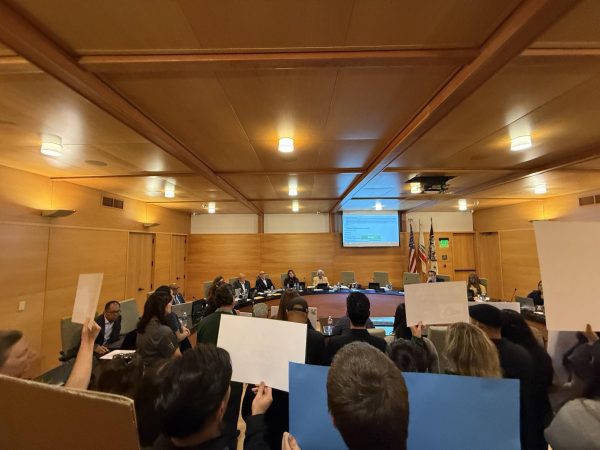
The meeting was led by Board Vice President Laura Santos in the absence of Board President Robert Hidalgo, Clerk Jay Chen and Trustee Judy Chen Haggerty, who were not present.
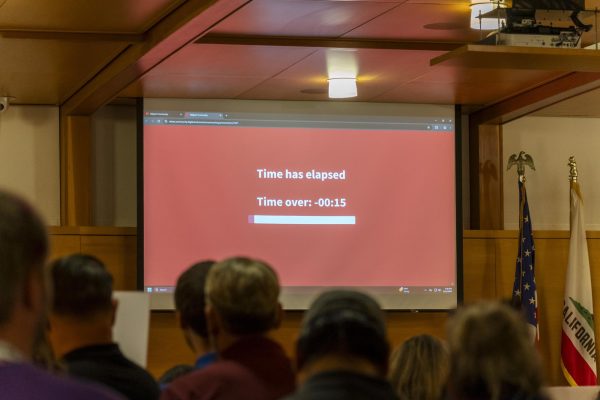
The vote followed more than an hour of public comment where more than a dozen speakers including counseling faculty, classified staff and student services employees, criticized leadership, citing ongoing instability, communication breakdowns and concerns about the division’s direction.
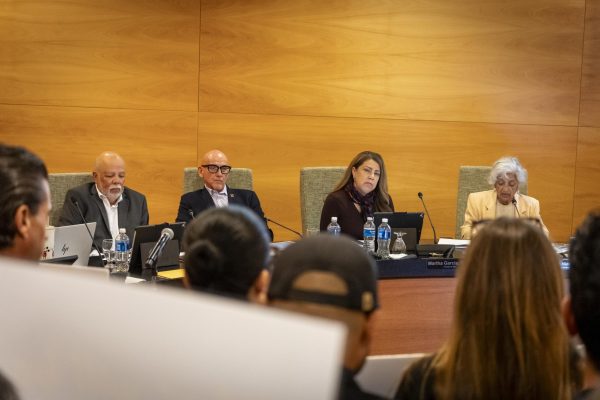
The vote of no confidence does not require formal action by the board, but it signals deep divisions within one of the college’s most critical divisions: student services, which oversees counseling, enrollment and student success programs.
Faculty cite breakdown of trust
Public comment followed closed sessions during which Eddie Lee, chair of the counseling department, told the board the counseling faculty were “voting to express no confidence in the leadership of the vice president of student services.”
Lee’s statement set the tone for a series of speakers who echoed similar concerns about leadership and workplace conditions within the division.
Luis Echeverria Newberry, a counselor with the Veterans Resource Center, said the vote reflects deeper institutional concerns.
“It represents a breakdown of trust that cannot simply be ignored if we are committed to student success and institutional integrity,” Newberry said.
“We want to be clear that making this declaration and making it public was not taken lightly”, he added.
Concerns over fear and working conditions
Speakers described ongoing issues within student services, including staffing challenges, communication concerns and the broader impact on students.
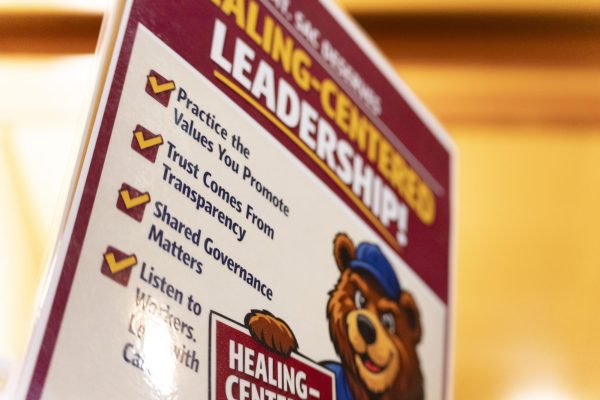
A statement read on behalf of a student services employee said, “Effective leaders elevate those around them and foster environments where employees feel respected, supported, and valued. Unfortunately, this kind of leadership has been missing in student services. For these reasons and after years of deteriorating trust and morale, we can no longer place confidence in Dr. Castro’s leadership.”
Faculty and staff framed these concerns as affecting not only employees, but also the quality of support available to students.
Chan-Phuong Ton, a counselor in the Counseling Department, echoed those concerns during public comment.
“How much more can Mt. SAC take at this point? How many more apology tours will our leadership take? How many more times do we allow for our leader to make mistakes?” Ton said.

“There’s a culture of fear and a lack of trust. People are afraid to speak up because of what might happen to their positions. Morale is at the lowest point that it’s ever been since I’ve been here, and I’ve been here for 20 years. Is this the kind of campus that we want?” Ton added.
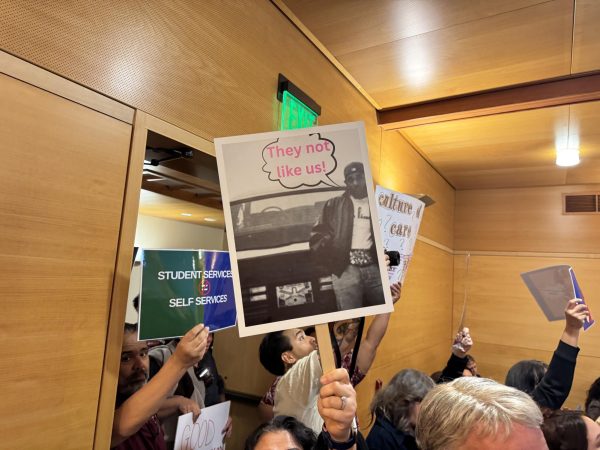
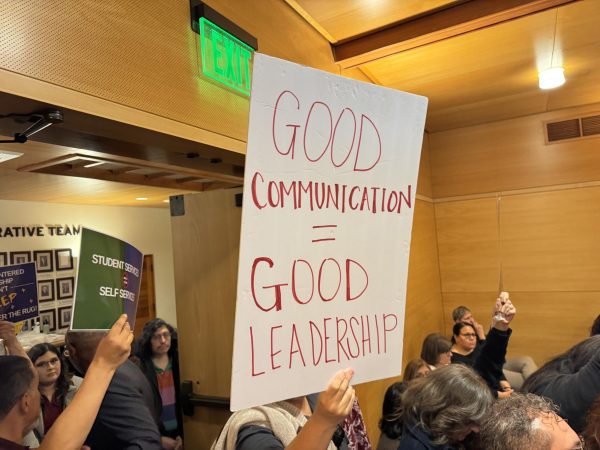
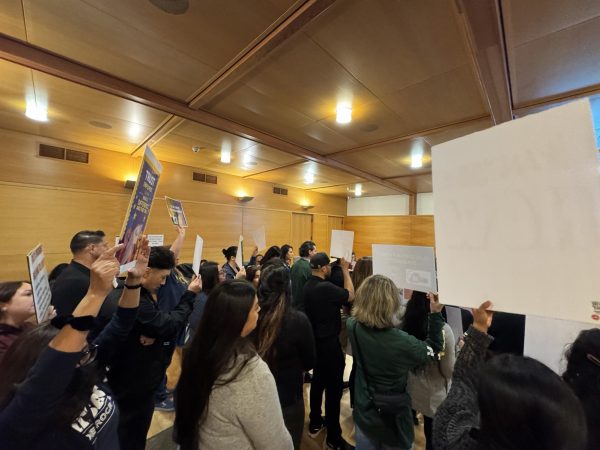
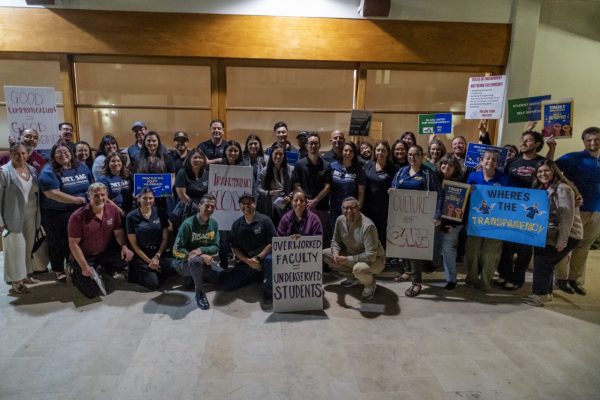
As speakers addressed the board, supporters stood behind them holding signs reading “Transparency = Trust,” “Overworked Faculty = Underserved Students” and “Culture of care? Where?”
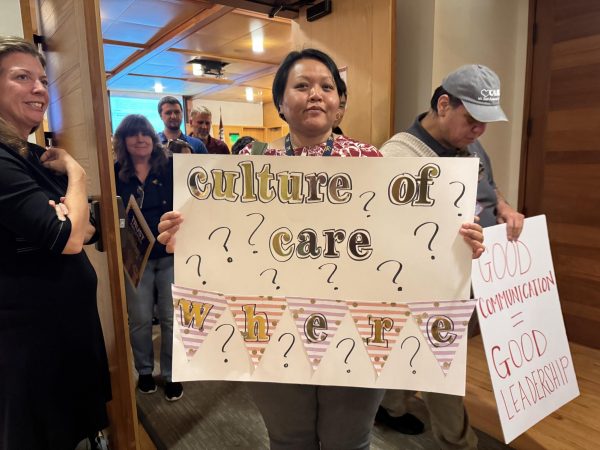
Audience members responded audibly throughout the comments, with murmurs of agreement and visible reactions.
What a vote of no confidence means
A vote of no confidence within the California community college system is a formal, nonbinding action used by faculty or staff to express dissatisfaction with leadership.
While it does not require direct administrative action, it serves as a public signal of disapproval and can increase pressure on district leadership to respond.
In this case, the vote directed at Castro highlights concerns about leadership within a division central to student access, retention and success.

Recognition of faculty amid tensions
While the board of trustees was in closed session, a reception was held to celebrate newly tenured faculty at the beginning of the meeting.
The board heard comments from newly hired faculty, newly retired faculty and current faculty who were granted tenure.
The recognition stood in contrast to the concerns raised later in the meeting.
Months of tensions leading to March
The March meeting reflects a continuation of tensions that have been building for months.
November
Trustees approved a contract extension and pay increase for President Martha Garcia, prompting faculty to question institutional priorities and widening wage gaps.
December
The board approved multiple management nonrenewals despite hours of public comment urging reconsideration. Decisions that included leadership changes within student services.
January
Administrative restructuring efforts continued across divisions, with faculty raising concerns about transparency and shared governance.
February
Tensions persisted, including concerns raised by faculty connected to library services and campus resources, though no single issue dominated public attention.
March (Today)
Those unresolved concerns had converged into a formal and public expression of no confidence.
Tension between trustees over financial reporting and governance roles
In addition to public comment, trustees engaged in discussion over the college’s quarterly financial report, which showed a cash balance of approximately $16 million in the unrestricted general fund.
Chief Compliance and Budget Officer Rosa Royce clarified that the figure reflects cash basis accounting.
“That is not correct… it is transactions on a cash basis reflecting the cash inflows and outflows of revenues and expenditures,” Royce said.
Royce explained that the report does not include accruals recorded at the end of the fiscal year and that expenditures and revenues fluctuate throughout the year based on timing.
Trustee Gary Chow raised concerns about how the figure could be interpreted without additional context.
“I don’t want to have a sticker shock at the end of the year … we go from 16 million positive six months and we go negative 10 million at the end of the year. That’s a $26 million swing,” Chow said.
Chow requested more detailed financial reporting, including breakdowns of revenue streams, expanded expenditure categories and accrual-based statements aligned with generally accepted accounting principles.
The discussion led to tension over governance roles and the limits of trustee involvement in operational matters.
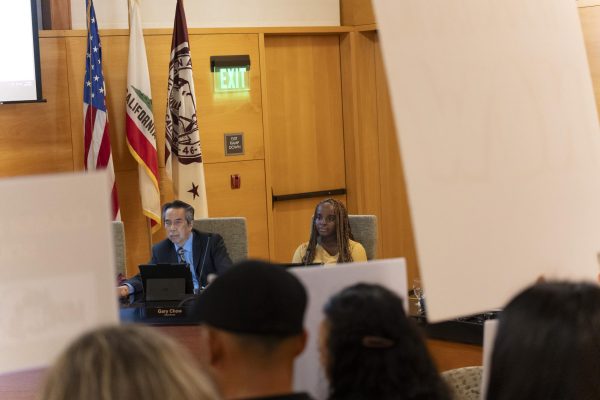
“Our governance role is not to instruct staff on how to create their financial documents. That is extraordinarily inappropriate for a board member to do,” former board president and current trustee member Peter Hidalgo said during the discussion directed toward Chow.
Hidalgo continued to reinforce that direction, emphasizing the role of the college president in managing staff.
“We have to direct all of our instructions to staff through the CEO … we have to be very careful of the guardrails as a board,” Hidalgo said.
Trustees later expressed interest in holding workshops or retreats to better understand budget processes, state funding flows and financial reporting practices.
Recognition of faculty amid tensions
While the board of trustees was in closed session, a small reception was held to celebrate newly tenured faculty at the beginning of the meeting.
The board heard comments from newly hired faculty, newly retired faculty and current faculty who were granted tenure.
The recognition stood in contrast to the concerns raised later in the meeting.
Looking ahead
Although the vote does not mandate action by the Board of Trustees, it places increased scrutiny on district leadership and signals a potential turning point in how concerns within student services are addressed.
The next Board of Trustees next meeting is scheduled for April 8.
Future meetings are expected to provide additional clarity on whether and how the administration responds to the concerns raised.


Jenn • Mar 17, 2026 at 8:19 pm
The tension from the president’s pay raise coinciding with 16 managers’ contract non-renewals has been palpable. Restructuring feels more like consolidation; unfortunately faculty, staff and students are feeling the effects when there’s now not enough support to handle the student’s needs.