


Those with an artistic and ambitious mindset often struggle with discouragement and doubt in pursuit of their aspirations. In the midst of daily commotion, it can be difficult to remember the importance of remaining dedicated to self-expression.
On view through April 22 in the building 13 gallery, “Somebody Else’s Day” explores the power of pouring consistent energy into the process of cultivating creativity. The show opened on March 11, and features work from sketchbooks kept by photography program lead and Mt. SAC professor, Chris Benoe, between 1996 to 2001.
Benoe explained that he continuously promotes sketchbooks to his students as tools for creativity. After reflecting upon the impact encouragement from an instructor can have on students, Benoe decided it was the right time to showcase pieces from his old sketchbooks. He hoped that they would inspire students to risk failure and dedicate themselves to their creative pursuits.
“It’s through all those failures that you grow into this artist or the person that you really want to be,” Benoe said. “If you’re playing it safe and you never show your work, eventually the work kind of dies and you do stuff that’s safe.”
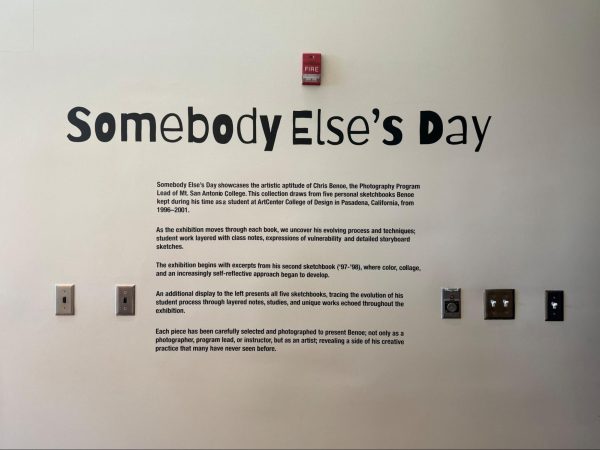
Project expert, Gabbie Salvatierra, took on the responsibility of organizing the show in an effort to highlight a side of Benoe that students and faculty don’t get to see. With the help of others, like full-time lab-tech, Terah Williams, Salvatierra aimed to reveal elements of Benoe’s creative process and journey as an artist.
“I always appreciate being able to see another side of people, because as a professor, you’re just a professor, or even as a student, you are always one way to everyone,” said Salvatierra. “And being able to showcase all this stuff shows, ‘This is who I was, or this is what brought me here. Or where I could have been, or, even now, where I could be going.’”
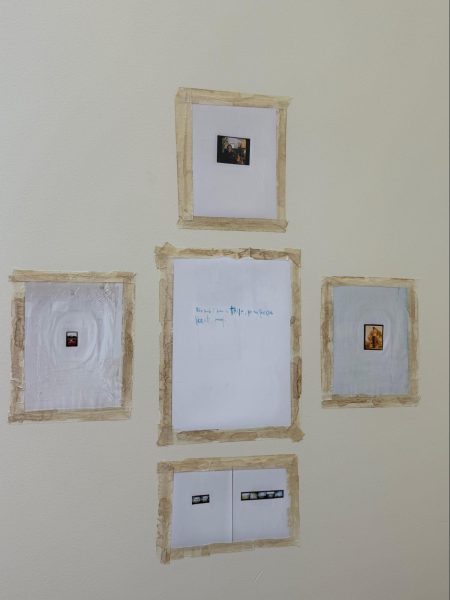
Salvatierra made many decisions regarding the display of the pieces featured in the show. She and Williams went through all five of Benoe’s sketchbooks and selected the ones that stood out to them. They utilized smaller photos of their choices in order to plan the layout of the show.
“We had the little four by sixes so we could kind of lay it out and it would be easier to figure out what went together without having to print everything big and then figure that out,” said Salvatierra.
Most pieces were displayed in the gallery cases, but Salvatierra decided to attach additional photos to the wall using tape. Photography student and student assistant, Alex Martinez, who assisted Salvatierra during the show’s development, suggested the tape should be stained to create a more immersive visual experience.
Many of the pieces included text scattered amongst the drawings and pictures. When he began incorporating text into his work, he took inspiration from painter, Jasper Johns, as well as the title and end credit sequences in the film “Seven.”
“One of the things about ‘Seven’ that was so new for everybody was the title page,” said Benoe. “The title and end sequences where they almost made those a quintessential part of the movie. Not just the names of the director and the actors and the musicians in the movie, but they became this distortion of text and names, and that had a big impact on me at the time.”
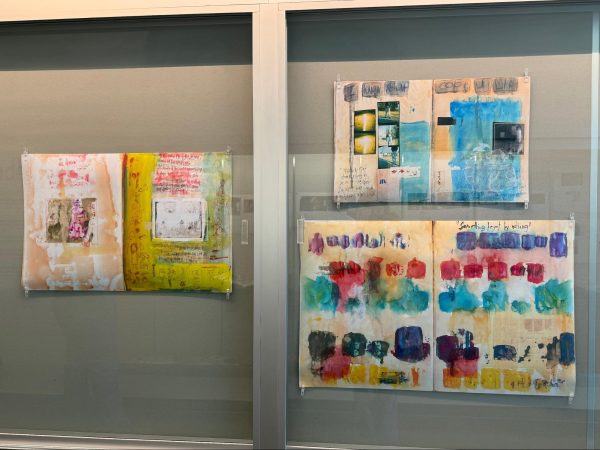
Salvatierra expanded upon the importance of the thematic aspects of the show. She emphasized the value in artistic expression as both a creative outlet and a healing tool.
“Everything is so chaotic these days, and we never know what’s going to happen or what’s going to be revealed for the day in the world,” said Salvatierra. “I think everybody gets so enclosed in their bubble that it’s easy to forget to have fun and express yourself.”
Benoe described how his outlook on creative action has evolved over time. He encourages students to stop aiming for perfection and believe in the work they are creating.
“Process is so critical to everything that we do, and I always thought it had to be the perfect environment, the perfect situation, the perfect amount of time, the perfect schedule, like everything has to be perfect,” said Benoe. “The difficult thing for me to realize is that almost nothing is ever perfect.”
Benoe referenced an article he read about gardens as he explained how he hopes the show serves as a reminder to viewers about the sometimes surprising results of creative processes.
“You try so hard to build this perfect garden and everything you do dies in that area, and you kind of abandon it,” Benoe said. “You come back a month later, and this whole section of flowers is blooming, and it’s the most beautiful thing you’ve ever seen. None of it would have happened if you didn’t start that other process, however little or much you did.”
