


March is Women’s History Month and the origins of the month should be explored. Along with honoring the sacrifices, accomplishments and contributions of women which has led to lasting cultural impact that has shaped today’s society.
By 1986, 14 states had already declared March as Women’s History Month. This was a big push in persuading Congress to pass a legislation to officially recognize March as the month to honor and acknowledge the women who have built our country.
However, before Women’s History Month was officially established in March 1987, there were other key establishments that led to Congress designating this month as the time to honor them.
Prior to Women’s History Month being established by Congress, there was Women’s History Week and before that there was only International Women’s Day.
Since 1975, March 8 has been recognized by the United Nations as the official day to celebrate International Women’s Day. However, according to the Smithsonian American Women’s History Museum, the beginnings of the holiday are found in the early 1900s to promote women’s rights.
The first National Women’s Day was celebrated in 1908 when there were over 15,000 women that marched through New York City demanding shorter working hours, better pay and the right to vote.

This helped push for the first International Women’s Day on March 19, 1911. Countries like Germany, Switzerland, Denmark and Austria being some of the first to internationally acknowledge the day.
Following the major women’s strike in Petrograd, Russia on Feb. 23, 1917, The United Nations solidified March 8 as International Women’s Day in 1975.
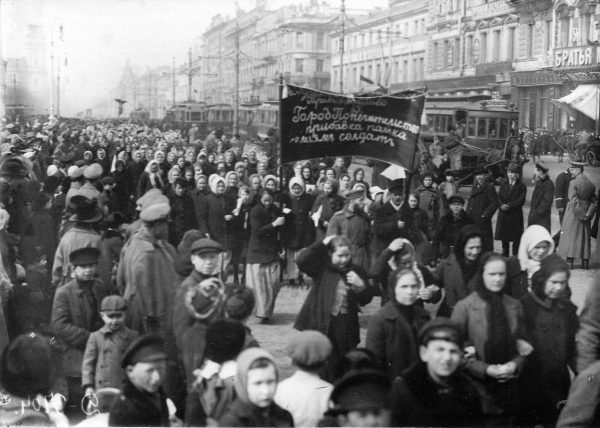
The strike in Petrograd saw more than 90,000 men and women protestors on the streets who were fighting for women’s rights. Protestors even clashed with police, and yet they still refused to leave the streets.
According to the same Smithsonian article, the pressure continued to rise after a cultural shift happened when World War I and World War II ended. Women came together to organize and stand up for social and legal equality, which pushed the United Nations to not only establish International Women’s Day, but also establish 1975 as International Women’s Year until 1977.
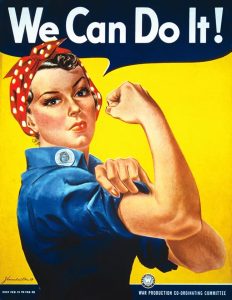
The National Commission on the Observance of International Women’s Year that was established by President Gerald Ford also expanded the opportunity to hear women’s issues across racial, economic and political divides.

However, a different article by the Smithsonian Institution explains that according to Ford, the legislative expansions did not address all the aspects of discrimination that women faced.
“Significant progress continues in advancing the rights and responsibilities of women, in opening new opportunities, and in overcoming political, legal, social, and economic handicaps to which women have long been subject,” Ford stated. “Americans must now deal with those inequities that still linger as barriers to the full participation of women in our Nation’s life.”
Following the celebration of International Women’s Year, the Education Task Force of the Sonoma County Commission on the Status of Women organized a Women’s History Week in 1978. This started the first known Women’s History Week in the United States, beginning in Santa Rosa, California.
In 1980, President Jimmy Carter issued the first Presidential Proclamation, declaring March 2-8, 1980, as National Women’s History Week after historians and the women’s activists group led by the National Women’s History Alliance successfully pressured for it.
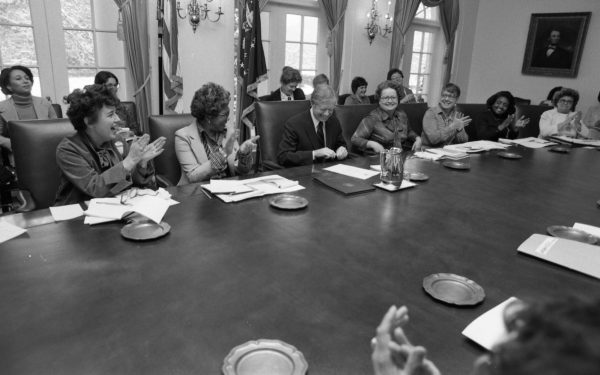
“Too often the women were unsung and sometimes their contributions went unnoticed,” Carter stated. “But the achievements, leadership, courage, strength, and love of the women who built America were as vital as that of the men whose names we know so well.”
According to the Library of Congress, President Ronald Reagan continued the tradition by issuing proclamations for the week throughout his presidency. He issued Presidential Proclamation 4903, which proclaimed the week beginning on March 7, 1982, as Women’s History Week again.
The week of March 8 then primarily focused around International Women’s Week and coexisted with International Women’s Day to recognize the vital role of women in American history. Reagan affirmed the recognition of women in the proclamation.
“As leaders in public affairs, American women not only worked to secure their own rights of suffrage and equal opportunity but also were principal advocates in the abolitionist, temperance, mental health reform, industrial labor and social reform movements, as well as the modern civil rights movement,” Reagan stated.

In response to the hard efforts that were carried on by the National Women’s History Project, Congress established Women’s History Month in March 1987. Each president since 1995 has issued a proclamation to observe the month with important ceremonies and to study the contributions of women in U.S History.
Women’s History Month continues to remain a widely celebrated to honor the women who have had a significant impact in history by addressing events often forgotten. While Women’s History Month has been reduced to a marketing opportunity in some cases, there should remain the highlights and celebrations of women’s achievements. The recognition of all women is important, therefore the origins of the month should be acknowledged as well.