

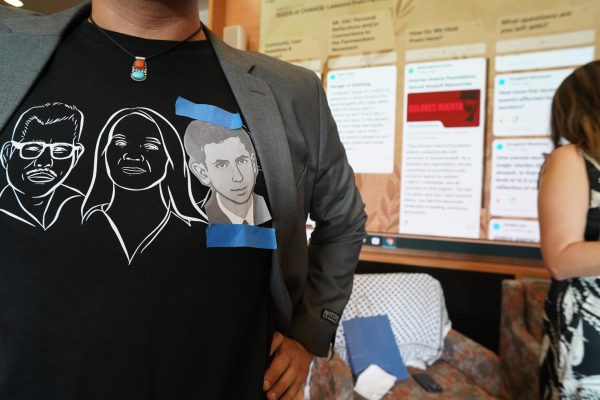
Mt. SAC’s Equity Center presented “Seeds of Change: Lessons from Farmworker communities on Labor, Justice, and Solidarity” on March 26, where they highlighted the unseen Filipino labor workers that kickstarted the United Farm Workers Movement.
During the event, several short films were shown explaining the struggles of the United Farm Workers in pursuit of better wages and working conditions. They explored the often overlooked roles of women and the Filipino community in the fight.
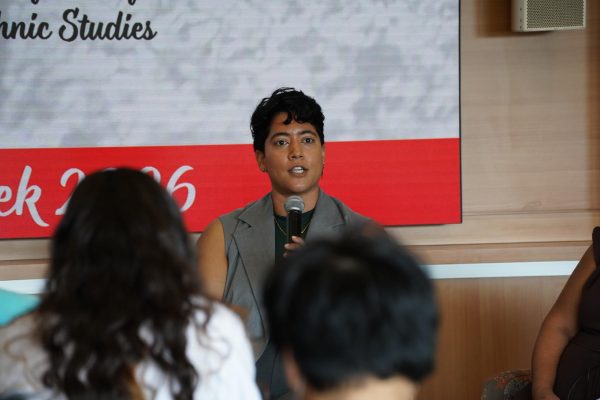
After the films, there was a panel discussion on the films’ meanings for farmworker communities as well as the impact that women had on the movement. The panel featured three Mt. SAC professors; Prahas Rudraraju, professor of Asian American and Pacific Islander studies, April Tellez, professor of history and ethnic studies and Michael Angel Vazquez, professor of ethnic studies.

One audience member asked the panel about the recent revelations regarding Cesar Chavez and suggested that one of the other leaders of the farmworker movement be recognized. Professor Prahas Rudraraju responded that while they could understand the desire to raise up a leader to celebrate, it might be better to recognize the movement as a whole.
“When we think about the farmworkers movement, the reason why it was so successful is because you have thousands of farmworkers across various different backgrounds who are fighting for better wages.” Rudraraju said.
An audience member then asked about the role of ICE activities and surveillance in the lives of farmworkers.
“So there are certain families out there today that I know that are farmworkers that have now had contingency plans that they’ve given to loved ones, like my parents, to like, if something were to happen, here’s what I want you to do with my children,” Vazquez said.
In one of the most painful, yet eloquent moments of the discussion, the subject of sexual assault in the farmworker community was explored. Tellez, herself a survivor of sexual assault, addressed the question.
“I would argue I’m not trying to apologize for Cesar Chavez at all or minimize because it’s horrific,” Tellez said. “It’s unacceptable, period. But it also truly is a reflection of what happens and what has manifested in larger society. We do live in a misogynistic society. We do live in a highly entrenched patriarchal society.”

After the panel discussion, the coordinator of the event and program specialist for the Equity Center, Andrea Garcia Gonzalez had some comments about the motivations behind the event and her personal connection to it.
“So growing up in the Central Valley … just about every person in my family, both women and men were either farm workers, like picking fruits in the field, working in dairy farms, packing houses,” Gonzalez said. “So through and through, it’s part of my identity.”
“So wanting to bring that to the campus first and foremost, knowing that we have such a responsibility on our campus to educate, especially on the lives of maybe those that we don’t come in contact every day,” Gonzalez said, in reference to Mt. SAC connection to farmworkers.
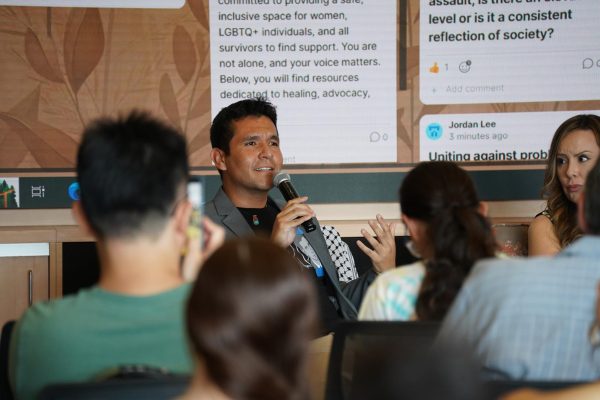
Professor Vazquez offered some thoughts on his familial connection to the farmworkers as well as the irony of the people doing the labor, benefitting the least from it.
“The bracero program was a program that during World War II brought … Mexican workers to the United States to work seasonally,” Vazquez said. “And my grandpa was one of those. He worked in the Central Valley of California.”
Unfortunately, according to Vazquez, many of the companies were not just in the business or agriculture, but exploitation as well.
“Companies like Coca-Cola, companies like Minute Maid, companies like Chiquita Banana, which has a terrible history in Central America and South America, really rely on exploiting workers, many of them are indigenous and black, from having a living wage,” Vazquez said.
Vazquez ends on a hopeful, if not challenging vision for the farmworkers’ future.
“So, you’ve probably heard this idea that, like, controlling the means of production, right?” Vazquez said. “The laborers are the ones who ultimately should have the say and have the support because they’re the ones doing the labor to grow it. Emiliano Zapata, who is a revolutionary in Mexico, said, like, the land belongs to the people who work the land.”
The next event being held in the Multicultural center will be on April 2, hosted by the PRIDE Center where they will host a History of Drag workshop from 1 p.m. to 3:30 p.m.