

In 1985, the journalism industry exploded. Industry leads like Time Magazine, The New York Times and others were bought by larger companies in the interest of expansionism. However, with millions of people nation-wide living in news deserts, student journalism is no longer a luxury, but a necessity.
The decline of modern day journalism can be traced back to, at least, the 1980s when many companies were beginning to buy up others in various sectors in order to add to their portfolios. These mergers would come to create some of the largest news networks that we have today.
Time Inc., a company that had been in the business for more than 60 years, merged with Warner Communications in 1989 forming Time Warner Inc. and was according to an essay written by The Journalist’s Resource, the biggest media conglomerate to date in 2013 but has since become a shadow of its former self.
While these expansions worked for a while, in the 1990s when the internet became more widespread, people could simply just use that to find their information. So, that’s what they did. Slowly, people began to abandon physical newspapers in favor of more accessible information through television, radio and the internet.
With the decline of print, so came the evaporation of money and the pressure to make more of it. With the global market collapse of 2008, profits became even slimmer and the industry felt that. The trend continued through the 2000s and into the 2010s when at the turn of the decade, 70 million people nation-wide lived in places considered to be news deserts which don’t get any local coverage.
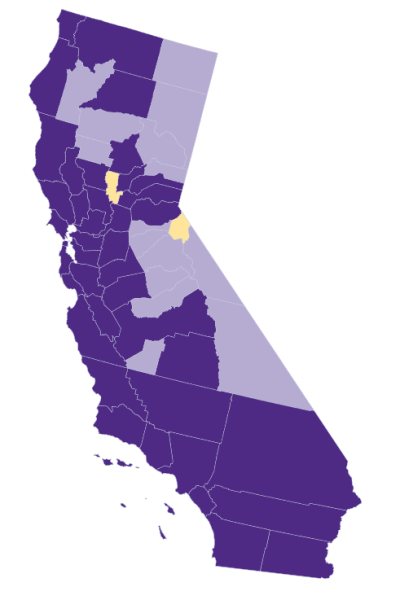
According to a map produced by the Northwestern News Initiative, While Los Angeles county is fortunate to have over 100 publications operating within its borders, 15 out of the 58 counties in the state of California only have one publication operating in any capacity with two counties having zero coverage at all also known as a news desert.
Student journalists fill the void that are news deserts by simply existing. Each story that a student publishes is a step toward eradicating these deserts. Without student journalists existing to fill the void in these places, misinformation and coverups could run rampant in underserved communities. People who have power could abuse that power if there is nobody there to investigate it.
For example, at Mt. SAC there is the issue of Campus Police and Safety wanting to purchase AR-15 style rifles for their sworn officers. If there was no student publication to track the progress of this deal, students would be left in the dark, only guided by the vague light given to them by administration. Since we have student publication, we can help ensure the transparency between the government of the school and the student population they serve.
However, these journalists also have the unique ability to provide local coverage of their communities and events but also provide reporting on national headlines to help keep them informed so they can better make decisions.
Another example from SAC Media was a weekly series that informed the viewer of things the Trump Administration was doing every week. The Daily Nexus is another student based publication from University of California Santa Barbara. On March 21, they published an article regarding the Trump Administration’s directive to restart the use of the Santa Ynez Unit and an oil pipeline which previously ruptured in 2015, off the coast of Santa Barbara.

The Daily Nexus’ piece is unique in the fact that not only is it a national headline, but it is localized specifically to their area, giving these journalists the perfect opportunity to explore how people are responding to this news.
In stories like that, it’s imperative to keep their readers informed in case any developments happen. In a strict news desert, there is a chance for that story to slip under the radar and people wouldn’t know these plants are restarted until too late.
In SAC Media’s case, we also have staff that go out to cover local events like Anime Pasadena or Creep I.E. Many events like these would go undiscovered for someone in say Walnut or Azusa just due to the relative distance.
As journalists, we get to tell the stories of anything and get to share the knowledge that they exist exposing them to whole new audiences.
In a world with dwindling respect for the press and the alarming rate that news is disappearing, student journalists fill the shoes of those before them. While they provide necessary coverage to communities that lack it, student journalists are also important because they build the future of the industry. Without them, there is no journalism after the current professionals are gone.
With the industry pushing for success, student journalists are the ones paving the road when those before them are gone. They aren’t just a luxury that people can take for granted anymore. They’re the foundation of democracy that the world has to rely on for the future.