


Mt. SAC’s food pantry continues to serve students as recent events drive up the cost of everyday items and essentials, giving a measure of relief for those on campus to feed both themselves and families.
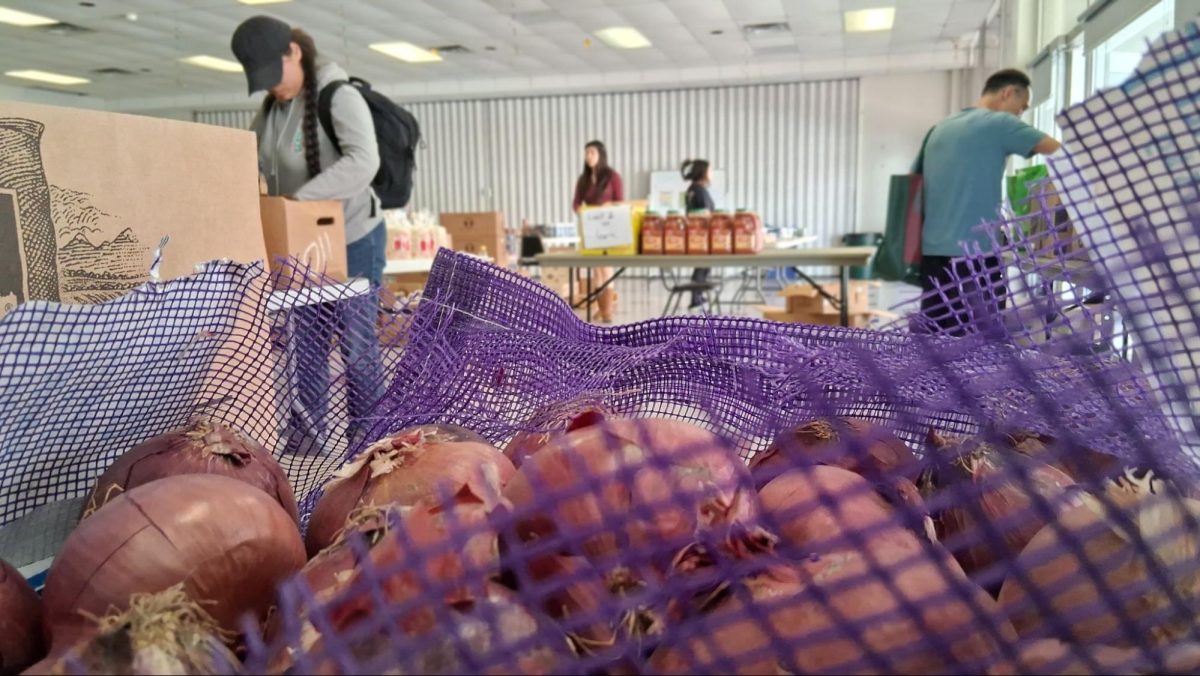
Aided by “Pop-Up” pantries, located in building 9C, the food pantry covers more ground and can assist more students facing food insecurity. Helen Hernandez, lead project expert, mentioned that the idea was fairly new and works well.
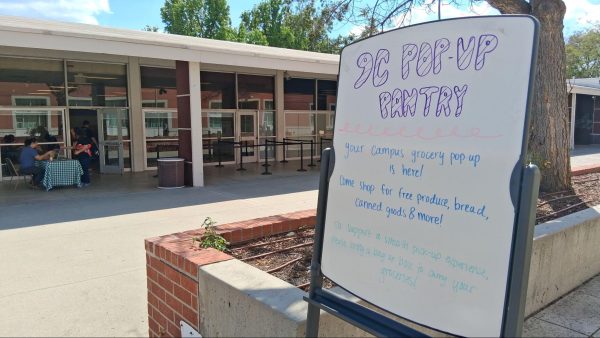
“Students can access the pantry every single week where before it was two weeks out of the month,” Hernandez said. “The main difference though, is that 9C doesn’t hold any refrigeration products where in 67A we do.”
Though the flow of students has been relatively steady in 67A, the pop up pantries in 9C have seen an increase in foot traffic.
“We get an average of 600 [students] a week at 67A … it’s been going up at 9C [with] 400 [students] a week and now up 500 and I do anticipate it going up because of what’s going on with the economy,” Hernandez said.
California residents are no strangers to high costs of everyday items. According to AAA, the national average retail price for unleaded gas in CA is two times more than the national average. In Los Angeles county alone, gas prices soared to six dollars a gallon with diesel hitting roughly seven dollars a gallon.
High prices for common goods is why students like 19-year-old Fire Tech major Aron Martinez, line up for the food pantry.
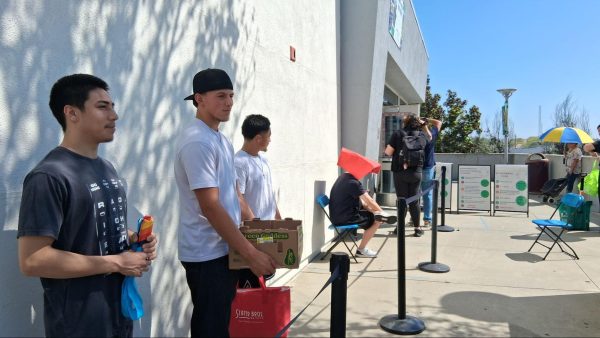
“I’ve been here … almost every time,” said Martinez. Accompanied with his friends, 19-year-old computer science major, Miguel Moreno and 20 year-old kinesiology major Evan Robago, the three visit the food pantry as often as they can.
All three visit to both feed themselves and their families with whatever items they can find. When asked if there is a favorite product any of them like, Moreno replied, “Yeah … the sticky rice or any of the sweets and frozen meals.”
In addition to frozen meals, the food pantry is stocked with canned foods ranging from various vegetables to tuna. Having the shelves stocked in your home with canned goods can give a sigh of relief seeing items readily available.
Foods that have long shelf lives are also a hit, because it allows people to ”… have [food] in there for months like beans, corn, things like that,” Robago said.
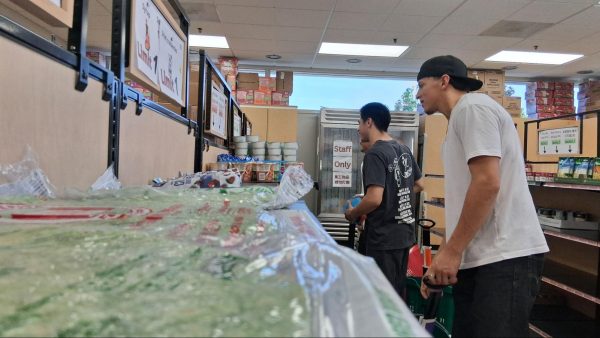
Dry and canned goods, while reliable, aren’t necessarily the favorite amongst those who line up at 67A. If not amongst the first, students can miss out on some of the pantry’s popular staples.
“Our hottest [items] are milk, eggs, produce, avocados, bell peppers and the frozen section, which doesn’t hold much,” Hernandez said.
One factor that makes the food pantry unique is that it is open to all registered students regardless of financial status.
While some students may feel a stigma when it comes to using the food pantry, if they don’t utilize it, they miss out on a service the campus is providing.
According to Hernandez, the food pantry used to have presentations that introduced students to the pantry’s services. Done by members of Mounty Fresh, the presentations helped break mental barriers that students had and helped establish a relationship.
“I felt like that took away the stigma,” Hernandez said. “[The students] would see us present and be like, oh yeah I saw them earlier and I know I can go visit.”
Due to her limited staff, presentations have yet to be re-established as part of the food pantry operations. They do take volunteers to help serve students at 9C and those interested can email mountiefresh with a brief description of themselves and times they are available.
Regardless of any setbacks or obstacles, Hernandez works to ensure students get what they need when it’s available.
However, for students waiting in line and bearing the heat, stigma was not an issue.
“There’s nothing to be embarrassed about,” Moreno said. “If you gotta eat, you gotta eat. There’s nothing really much to it … Instead of thinking … just go to the pantry and you’ll find it’s not as embarrassing as you think.”
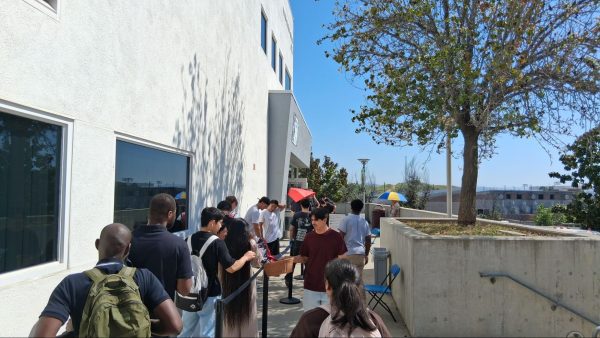
“I mean it’s free for everybody. [There’s] no reason you shouldn’t be here, especially if you’re struggling with food,” Martinez said. “It’s just here … it’s an amenity that they offer, and if you don’t have it yet, you’re just missing out.”
Students may not yet fully be aware of the services like the food pantry Mt. SAC provides. For those that are, Martinez’s words reflect what studies have shown over the past few decades on the barriers that shame puts up for those struggling.
In a 2025 article from Delaware Journal of Public Health, stigma was seen as one of the main factors of resources being underutilized by the public. Spanning across the United States and parts of the U.K , the study revealed that … “Stigma, in this context, can be defined as a social process where individuals are marked, judged, and devalued based on their food insecurity status or use of assistance programs.”
Researchers who interviewed those who needed help also found that those who knew about food banks in their area were too prideful and ashamed to seek assistance.
However, students like Moreno and Robago have no problem dealing with society’s perspectives as they see past the facade and understand that everyone goes through hard times.
“There’s other students here that need it just as much as you do, maybe even more, [so] just come by. There’s really no reason to be embarrassed about it,“ he added.
For further details on times and dates visit Mountie Fresh Food pantry.