

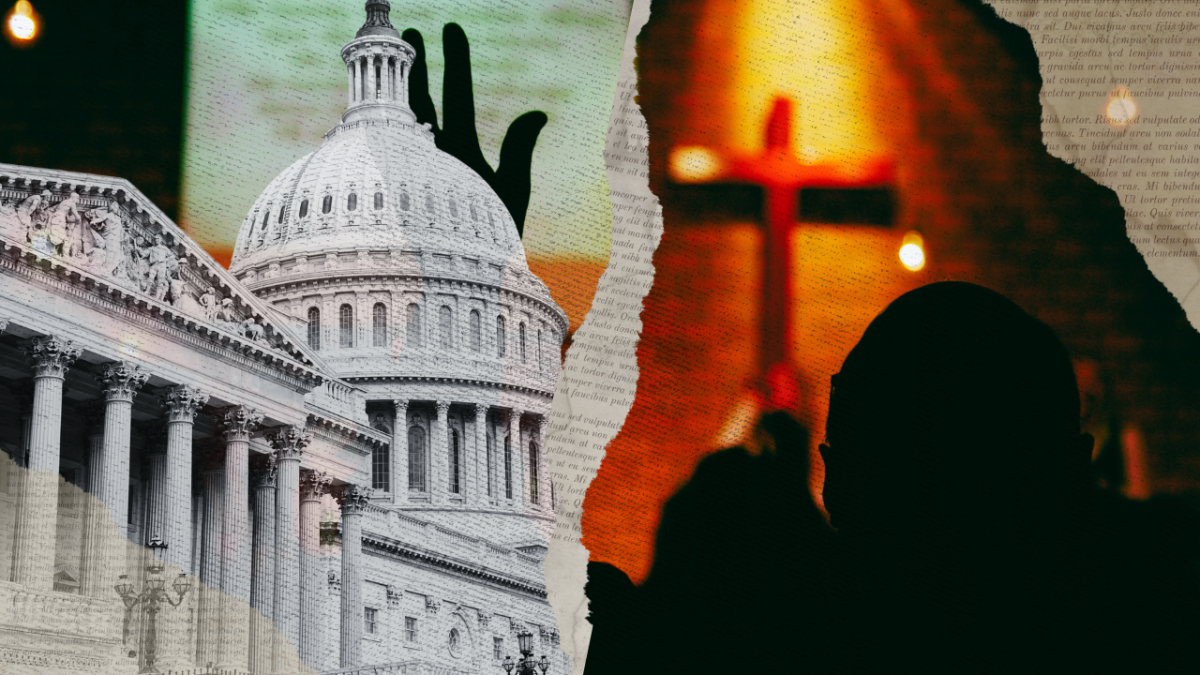
Religion affects all aspects of the world, from cultures to governments and even shaping some values and lives. The battle between ethics and morality is rooted in religious beliefs. This divide is not strung from modern day, but instead has been an ongoing battle since religion was introduced centuries ago.
In my opinion, governments need to separate religion from politics to ensure equality and avoid discrimination. Failing to do so causes a divide between the people, and conflict with the government.
One major controversial topic is abortion. Many religious groups are publicly against abortions because they believe it is morally wrong and life is deemed at conception. While pro-lifers argued that women should have the right to choose for themselves without religious influenced laws condemning them.
This debate has created conflict between those with different beliefs. People who don’t consider themselves religious question why they are required to follow laws influenced by religion.
Religious beliefs often take part in making laws and policies. As a result, tension rises between the two parties causing protests and arguments over human rights. A prime example in American History is the Constitution, which exercises religious freedom.
In addition to politics favoring religious beliefs, it also plays a key role in discrimination within certain communities. For example, traditional religious beliefs about sexuality and gender often shun and judge those who don’t identify with traditional religious norms.
In countries like Iran, engaging in same-sex sexual acts criminalizes you under the Islamic Penal Code and can result in harsh punishments such as lashing, imprisonment or the death penalty. Being punished for your identity because it does not align with the religious principals of your country shows how laws created from religious bias take away personal freedom.
Other than homophobic discrimination, another community that is heavily impacted are women. The misogynistic ideas, which are often stemmed from the religious belief that women are caregivers and should obey their husbands under any circumstances contribute to gender inequality.
In Afghanistan, women are required to be fully covered with only the eyes being visible, boys and girls having to be in separate classrooms and women are not allowed to have high government positions. This is all to comply with the Islamic law and gender separation under Taliban rule.
Afghanistan specifically, combined the country’s official religion with political ideas and it resulted in being denied basic human rights for many women.
While religion is important to many people, there needs to be a limit on how it can shape our societies without taking away human rights and stripping individuals from their identity, especially when it’s used to discriminate and demoralize against those who do not accept their beliefs.